


What is happening with Ebola?
A rare Ebola strain called Bundibugyo Virus Disease (BVD) is spreading in some countries, putting children, their families and communities at risk.
This is a public health emergency of international concern. The virus is spreading across different communities, putting many families at risk - not just because of the disease itself, but because it is making it harder to access healthcare and meet basic daily needs. Cases have already been reported in several locations in different countries.
There is currently no approved vaccine or specific treatment available. UNICEF and its partners are scaling up life-saving support, working with local authorities to help contain the outbreak and protect children, their families and communities.
PLEASE CONTACT YOUR LOCAL HEALTH AUTHORITIES FOR MORE INFORMATION.
Here are four very important things you should know about this virus:
- The Bundibugyo virus spreads in two ways.
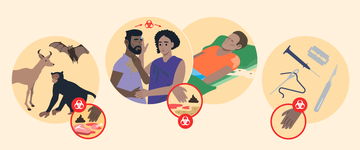
- First, it can pass from wild animals - like bats or monkeys - to people.
- Then, it spreads from person to person through direct close contact with body fluids of someone who has symptoms of the disease or someone who died from it. This includes touching items or surfaces contaminated with infected body fluids or things that an infected person has used, like bedding or clothes, which can carry the virus on them.

Fruit bats are believed to carry the virus without getting sick themselves, while other animals like monkeys can catch it and become seriously ill.
- This virus is very dangerous. In past outbreaks, in certain locations, 5 out 10 of the people who got sick with Ebola died from it. This is why protecting yourself and the people around you matter so much. Every precaution you take can save a life.
- If you feel sick or think you may have Ebola, go to a health centre right away. GETTING HELP EARLY CAN SAVE YOUR LIFE.
CLICK ON THESE BUTTONS TO GET MORE INFORMATION ABOUT BUNDIBUYO VIRUS OR BVD 🔘
 Facebook
 X
X
 LinkedIn
 WhatsApp
 Email
Email
 Copy Link
Average Rating: ☆ ☆ ☆ ☆ ☆ (0 reviews)