


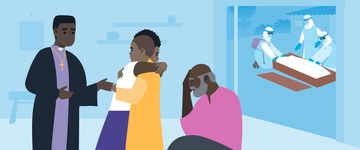
Caring for the loved ones we have lost to BVD Ebola 🫂
Handling the deceased with care and dignity is crucial to stopping the spread of this disease in your community.
During a Bundibugyo virus or BVD outbreak, it can be harder to say goodbye in the usual way. Fear, confusion, and concerns about burial practices can make this even more difficult for families.
What to remember:
- If someone dies at home with symptoms, CONTACT YOUR LOCAL HEALTH AUTHORITIES before anyone touches the body.
- Report the death to health authorities so they can assess if a safe and dignified burial is needed.
- Do not touch, wash, or kiss the body. The body can still spread the virus.
- The body should be handled only by specially trained people wearing appropriate protective equipment and will be buried in a body bag provided by health authorities.
- Allow burial teams to take a swab from the mouth of the deceased to test for BVD. If your loved one was confirmed to have died of this disease, health authorities will be in contact with you to provide further help to protect you and your family.
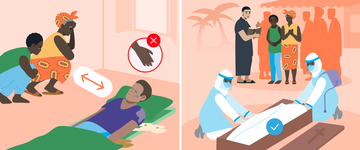
Respect traditions:
- Safe burials are designed to protect families and communities, while still showing respect for the person who has died. Burial teams will speak with families and try to respect cultural and religious practices as much as possible.
Why this matters:
- Funeral practices that involve touching the body or their belongings can spread the virus.
- Losing a loved one is very painful. By following these steps, you help protect others and save lives.
Click NEXT to learn more about the Bundibugyo ebolavirus recovery process for the or BVD 🏥
 Facebook
 X
X
 LinkedIn
 WhatsApp
 Email
Email
 Copy Link
Average Rating: ☆ ☆ ☆ ☆ ☆ (0 reviews)