


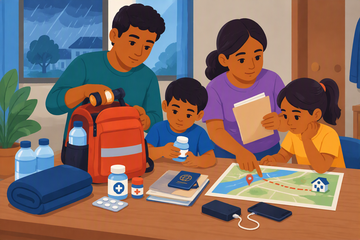
🎒Prepare before a flood
Flood warnings may provide only limited time to act. Preparing a simple plan in advance can help your family move more safely.
📻 Know your risk
Find out:
- Whether your home, school or workplace is in a flood-prone area.
- How official warnings are shared.
- Where higher ground and designated shelters are located.
- Which evacuation routes local authorities recommend.
Do not assume that every school, church or large building is safe during a flood.
🏠 Make a household plan
- Choose a safe route and an alternative route.
- Agree on a household meeting point.
- Identify one trusted contact outside the affected area.
- Decide who will support children and people requiring assistance.
- Ask people who need support what assistance works best for them.
- Consider any barriers that could make evacuation or preparedness more difficult, such as transport, accessibility, caregiving responsibilities or safety concerns, and identify available support where possible.
- Practise the plan together.
Help children remember their caregiver's name, telephone number and household meeting point, where appropriate.
👧🏽🧒🏽 Involve children and young people
Explain what floods are and why floodwater is dangerous. Make sure children know:
- Which adult to stay with.
- Where the family will go.
- Never to enter floodwater.
- How to seek help if separated.
Young people can help remember contacts or support younger children but should not be given tasks that place them in danger.
🎒 Prepare what you can
Use a waterproof, carryable bag for available essentials:
💊 Medicines, oral rehydration salts (ORS) where available, and basic first-aid supplies
💧 Drinking water and food that will not spoil quickly
🧼 Soap, menstrual hygiene and baby-care items
🔦 A torch, batteries and radio, if available
📱 A charged telephone and charger
👕 Clothing for local weather conditions
📄 Identification, medical information and important contacts
🧸 One familiar item for a child, if possible
A complete emergency kit may not be affordable. Start with what you already have, especially essential medicines and documents.
🤰🏻 Plan for pregnancy and infant feeding
Know where prenatal, delivery and postnatal care will be available if the usual facility closes. Include medicines, health records and baby supplies in the emergency bag.
Continue breastfeeding where feasible. If formula is used, safe water and clean feeding equipment are essential.
✅ What you can do today: Agree on one safe meeting point, a backup route and a trusted contact, and place important documents in a waterproof bag. Make sure everyone in your household knows the plan and who stays with each child. If roads, bridges or communications fail, use your backup arrangements and do not delay evacuation to move livestock or belongings.
Click NEXT to know how to stay safe during a flood 👇🏽
 Facebook
 X
 LinkedIn
 WhatsApp
 Email
 Copy Link
Average Rating: ☆ ☆ ☆ ☆ ☆ (0 reviews)