


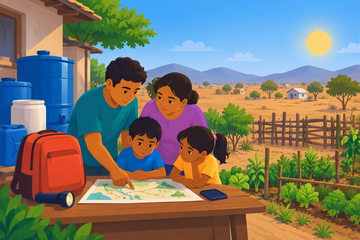
⏰Prepare early for drought and changing weather
Droughts often develop slowly, so the danger may not feel immediate. Preparing now, with whatever you have, can reduce harm later. Start with one practical action today.
Choose the topic you need below. Start with the most urgent concern for your household.
🚨 Prepare early and follow trusted warnings
Pay attention to any El Niño warnings issued by the local authorities in your country. Verify that sources of information on the effects of El Niño in your area are reliable and endorsed by local authorities.
📡 Stay informed:
Listen to official radio updates, talk to community leaders and humanitarian workers, and ask neighbours - especially those near rivers, boreholes or dams - about water levels.
👥 Identify the people most at risk in your household and community:
Children under 5, pregnant or breastfeeding women, elderly people, persons with disabilities and recently displaced households. Plan how you will check on and support them if conditions worsen.
📝 Build a household and community emergency plan.
Decide together:
• Where will you get water if your usual source runs dry?
• Who will care for family members who need extra support?
• Where is the nearest health facility?
• Who can you contact for help?
🎒 Prepare a household kit with what you can gather:
Dry food, oral rehydration salts (ORS), soap, any regular medicines, a torch, phone and charger, important documents, and menstrual hygiene items.
💡 Adapt this list to what you have available - many families across your country are already doing this. Any preparation, even one item, is better than none.
⚠️ Remember: drought and sudden flooding can both happen in the same season. Stay alert to signs of both, especially if you live near a river or in a low-lying area.
🌱 If you are a farmer: Do NOT plant on the first isolated rains - false starts can destroy your crop before the real rains arrive. Wait for confirmed, sustained rainfall and follow guidance from local agricultural extension officers.
Click NEXT to learn how to use and protect water safely during drought 👇🏽
 Facebook
 X
 LinkedIn
 WhatsApp
 Email
 Copy Link
Average Rating: ☆ ☆ ☆ ☆ ☆ (0 reviews)